 ]
]Metallica formed in Los Angeles, California in 1981. The original line up included James Hetfield (guitar/vocals) and Lars Ulrich (drums), who would both remain in the band permantly. Also in the line up was Dave Mustaine (guitar) and Cliff Burton (bass). The band took their love of British metal bands like Tygers of Pan Tang, Diamond Head and Iron Maiden, and created their own brand of metal that would be the foundation of the sub genre 'Thrash Metal'. They played on V-shaped guitars and adopted a spiked logo. On stage they dreseed just like their fans, wearing denim jackets, cheap jeans, band t shirts and bullet belts. This look and the bands music made them connect easily with their fanbase.

Guitarist Dave Mustaine was booted out of the band (and went on to form rival group Megadeth) and replaced by Exodus guitarist Kirk Hammet. In 1983 the group released their debut album Kill 'Em All

Although not a huge financial success, the album made the group hugely popular with the underground metal scene, earning them support slots on tour with bands like Venom and Raven.
Between 1983 and 1986, the band grew in popularity. They released the albums 'Ride the Lightening' in 1984 and 'Master of Puppets.' Both albums saw the band greatly progressing as musicians and songwriters, with many songs going over 5-6 minutes at length, featuring many complex solos and lyrics that covered many deep themes such as war.
Despite these changes the band still retained their 'denim and leather' look. Known for their excessive drinking, Metallica were affectionatly nick named 'Alcohollica' by their fans.

On September 27, 1986, during the European leg of Metallica's Damage Inc. tour, the driver of the band's tour bus, lost control and skidded, which caused the bus to flip several times. Ulrich, Hammett, and Hetfield sustained no serious injuries; however, bassist Burton was pinned under the bus and was killed. Cliff Burton's death left Metallica's future in doubt. The three remaining members decided that Burton would want them to carry on, and with the Burton family's blessings, the band sought a replacement. They hired Jason Newsted, formerly of the band Flotsam and Jetsam.

In 1988, Metallica performed on the Monsters of Rock tour, which included Van Halen and The Scorpions. The tour gained the group massive exposure as it saw them playing in massive of outdoor arenas, and in front of hundreds of thousands music fans. Afterwards the band released the album '…And Justice for All.' The album featured much of their darkest subject material to date, featuring references to injustice in the legal system, limited freedom, war, insanity and hate. This was accompanied by what may be the most complex song structures in Metallica's discography.
Now slightly older, the band now played on expensive ESP guitars and had the benefit of greater equipment. For the single 'One'the abnd had their first ever music video.

The music video, often featured in various 'Best Music video' lists, was ahead of the time as, unlike most other vidoes at the time, the video was dark and challenging in its content and presentation. The video is almost entirely in black and white, and features the band performing the song in a warehouse. It features dialogue and several scenes from the 1971 film adaptation of Johnny Got His Gun.
"One" puts great emphasis on the performances of the band members as musicians, with many shots of Hetfield, Newsted and Hammett's hands picking and fretting. The video features the band members in a typical early Metallica fashion: playing (as if in rehearsal) in some sort of warehouse, in tight formation around Ulrich's drum kit, and dressed in casual street clothes and with long untamed hair.
.JPG)
.JPG)
.JPG)
In late 1988, Metallica embarked on their Damaged Justice. This was to be their largest tour to date. As part of the stage show, a giant replica of the statue of Lady Justice, as it is depicted on the cover of '…And Justice for All.'


After this tour they recorded their 1991 self titled album 'Metallica' with producer Bob Rock. Often referred to as 'The Black Album', the album is their best selling to date. This is thanks to the more commercial and accesible sound that the band had created for the album, clearly seen in the ballad 'Nothing Else Matters.'

At this time the band were dressed in all black, and had since abandoned the denim and leather look.
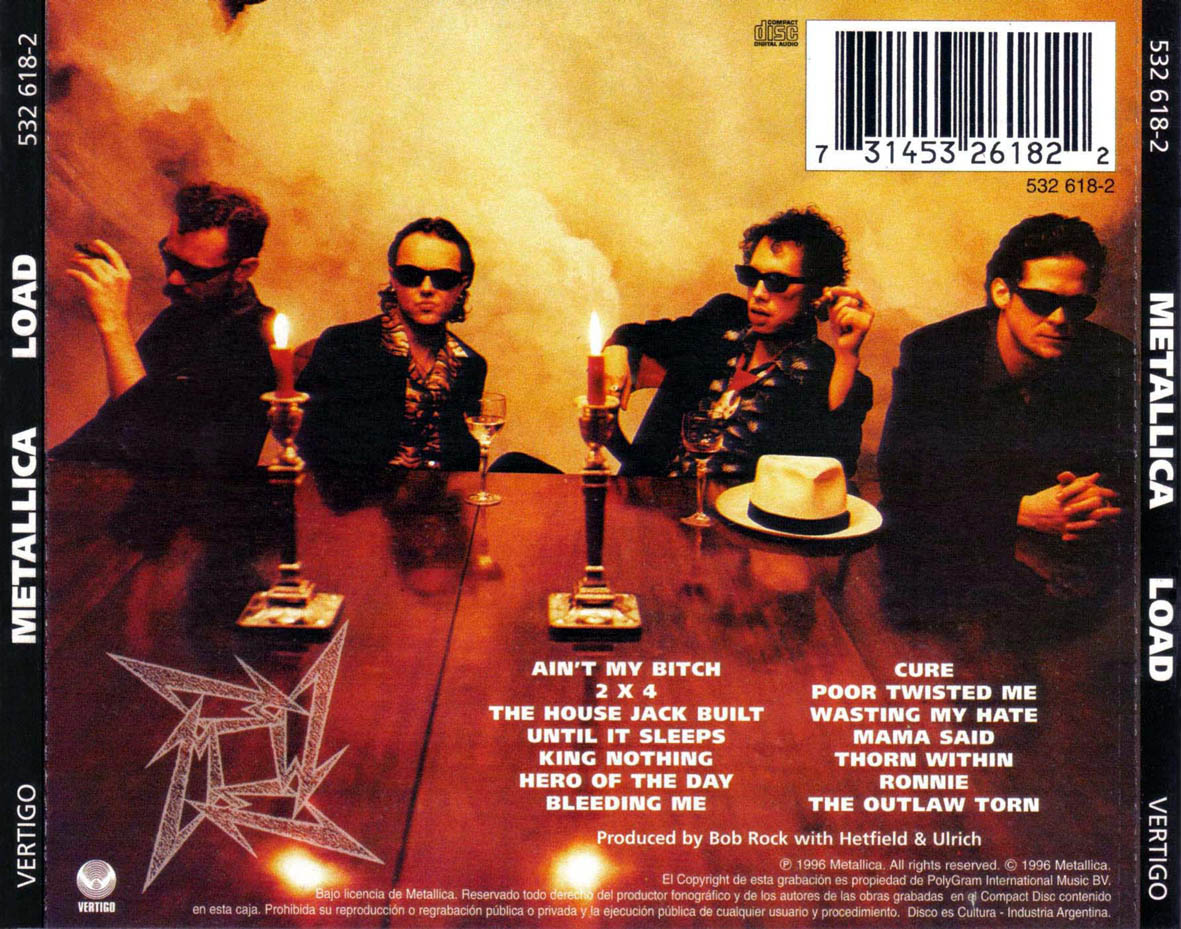
During the next five years Metallica did extensive touring to promote the album. In 1996 the band would release the album 'Load.' It was during this period that Metallica's image and musical style rapidly changed. The songs on Load were more bluesy and commercial, bearing little resemblance to the band's sound in the 1980s. On the album sleeve and booklet the band is depicted in various dress including white A-shirts with suspenders, Cuban suits, and gothic makeup. The booklet only contained select lyrics from each song in contrast to Metallica's previous studio albums which included complete song lyrics. Many fans did not respond positively to this change, accusing the abnd of being 'sellouts.'
The years 2000-2003 were hectic for Metallica. In 2000, Metallica sued file sharing website Napster for copyright infringement and unlawful use of digital audio interface device. This would provide bad publicity for Metallica as it made them look greedy and out of touch.
In 2001, bassist Jason Newstead left the band. In April 2001, filmmakers Joe Berlinger and Bruce Sinofsky began following Metallica to document the recording process of the next studio album. Over two years, more than 1,000 hours of footage was recorded. On July 19, 2001 James Hetfield entered rehab due to "alcoholism and other addictions". All recording plans were put on hiatus and the band's future was in doubt. However, when Hetfield returned on December 4, 2001, the band returned to the recording studio and Hetfield was required to work four hours a day, noon to 4 PM, and spend the rest of his time with his family. The footage recorded by was compiled into the documentary, Some Kind of Monster, which premiered at the Sundance film festival. In the documentary, Newsted described his former bandmates' decision to hire a therapist to help solve their problems which they could have solved on their own as "really fucking lame and weak".
Fan reaction to the movie was divided. Many applauded the band for having the courage to show themselves as naturally as possible whilst others derided the movie and the band for being nothing more than insecure rock stars struggling to come to grips with age and maturity.

After recoding the album 'St. Anger' the band recurited Robert Trujillo, formerly of Suicidal Tendencies and Ozzy Osbourne's band, as the new bassist.
In June 2003, Metallica's eighth studio album, St. Anger, debuted at number one on the Billboard 200. However reaction to albumw was mixed. Although Metallica had returned to a more dirty and heavy sound, Ulrich's "steely" sounding snare drum, and the absence of guitar solos were met with strong criticism.

In the years after St. Anger, the band regained their popularity through extensive touring, playing many of their older songs with newer ones.
In 2008, the band released the album 'Death Magnetic.'
'Death Magnetic' was a return by Metallica to their mid-eighties heavy/thrash metal roots, sounding more like 'Master of Puppets' and '...And Justice for All.' The album was a commercial and critical sucess, with people citing it as a return to to form.


The band are now considered to one of the most influential heavy metal bands of all time. The group sold more than 100 million records worldwide, making them the most successful thrash metal group ever.

No comments:
Post a Comment